














Gifting has never been easier
Perfect if you're short on time or are unable to deliver your gift yourself. Enter your message and select when to send it.

Reuben with the one-minute version. The written answer follows.
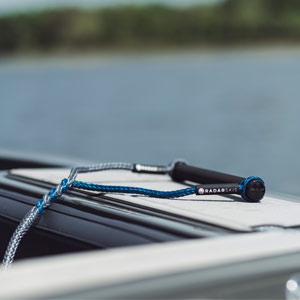
The short answer. Loose strands near the end of the rope or at a joint are almost always the splice — the rope fed back through itself, which is why that section looks thick. That is not a fray.
A real fray is further down the rope, where strands are broken and disconnected from each other. If your rope looks like that, replace it.
It is one of the most common questions we get in the shop: is my rope frayed, or is that just how it is made? The two look similar to anyone who has not been shown the difference, and they mean opposite things.
Customers see strands of rope poking out near the end, or at a joint between sections, and assume the rope is falling apart.
What they are looking at is the rope fed back through itself. That is how the splice is made, and it is why that part of the rope is noticeably thicker than the rest. Where the splice finishes, a few strands poke out. That is the construction doing its job, not damage.
A second check if you are still unsure. At the end of a skein the filaments all face one direction. That is normal — the rope is actually stronger there, because the skeins overlap. Filaments that sit opposing each other are the sign of scuffing damage.
Run your hand down the rope, away from the ends and the joins. On a frayed rope the strands are broken. They have been disconnected from each other rather than woven back in.
That is the difference in one sentence: a splice is intact fibres doubled back; a fray is fibres that have been cut through.
Fraying is usually abrasion — the rope rubbing against something hard or sharp. Reuben names two:
Add a third: bad knots. A knot tied so the load sits on the knot itself will scuff the fibres in exactly the same way an edge does. If you shorten your rope by knotting it, tie it so the load carries on the bite.
Shop advice rather than anything in the video, but it is what stops most of the damage we see come across the counter:
If the loose strands are near the end of the rope or at a joint between sections, and that part of the rope looks thicker than the rest, it is the splice - the rope fed back through itself. That is normal. A fray is further down the rope, where strands are broken and disconnected from each other.
Because the rope has been fed back through itself to form the splice. The doubled-back section is what makes it thick, and a few strands poking out where the splice finishes is part of how it is built.
Broken strands along the body of the rope, disconnected from each other rather than woven back in. Intact fibres doubled back are a splice; fibres cut through are a fray.
Abrasion - the rope rubbing against something hard or sharp. The usual culprits are the edge of your ski or wakeboard and the gunnel of the boat. Knots tied so the load sits on the knot itself will do the same thing.
Look at the direction of the filaments. At the end of a skein they all face one direction, which is normal and actually stronger because the skeins overlap. Filaments sitting opposed to each other are the sign of scuffing damage.
Replace it. Once the strands along the body of the rope are broken and separated, that section has lost fibre and there is no putting it back.
Keep it off hard edges, never trail it behind the boat when it is not in use, store it out of direct sun, rinse it with fresh water after salt water, and check it before every session.
If it is a fray, replace it: ski ropes and handles, wake ropes and handles, or the full ropes and handles range. Not sure what you need? The breakdown on water ski ropes and handles covers sections, lengths and handle types.
Related lessons: shortening a rope properly and attaching a tow rope to your boat or jet ski. More in the how-to guides.
Still not sure what you are looking at? Bring the rope into the shop at Moorooka in Brisbane, or send us a photo — it takes about ten seconds to tell.
Presented by Reuben at Waterskiers World — Australia's dedicated towed water sports retailer, family-run for over 20 years from our Brisbane store and online. Talk to our team.
Sign up for exclusive deals, latest product drops and more, plus get a first-order discount.
