











Gifting has never been easier
Perfect if you're short on time or are unable to deliver your gift yourself. Enter your message and select when to send it.
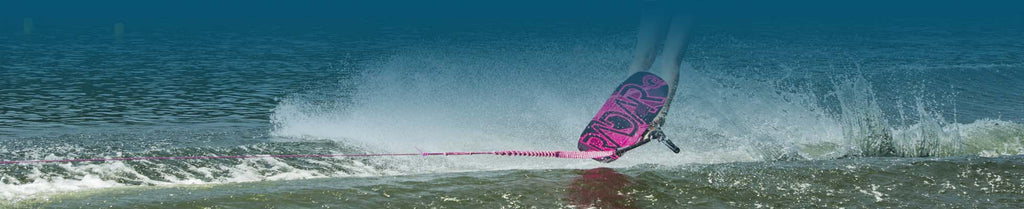
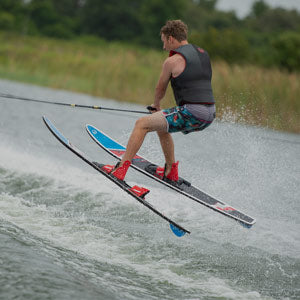
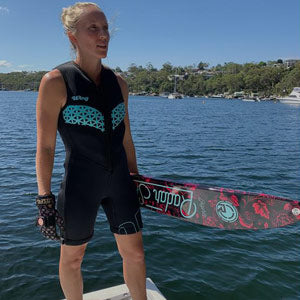
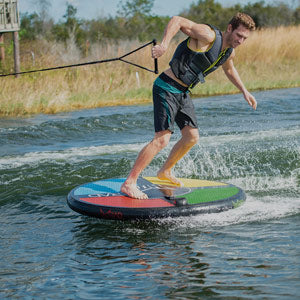
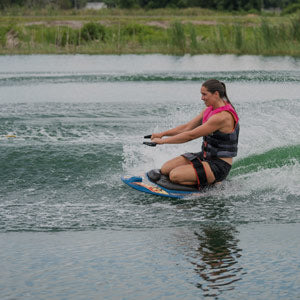
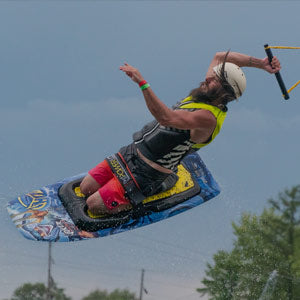
Trick skis for spins, flips and toe-hold tricks — one of the three tournament events. Short, flat and fin-free, they’re slippery underfoot and rewarding to master. Trick skis, packages and rear toe plates from Radar, KD and O’Brien.
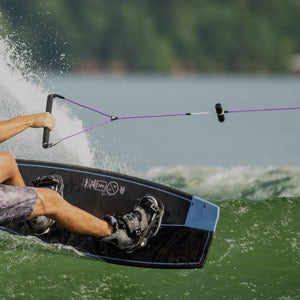
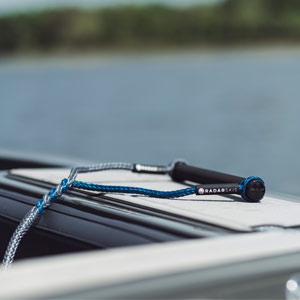
Trick skiing is one of the three events in tournament water skiing, alongside slalom and jump. The skier gets two twenty-second passes to land as many different moves as possible — spins, flips, wake lines and toe-hold tricks where the handle is attached to the foot. It rewards balance and timing over raw speed, which is why the boat runs slow. What makes a trick ski. A trick ski is short — roughly half the length of a slalom ski — with a flat base, no fins and sharp rails. That makes it loose and slippery underfoot, free to spin and slide in any direction. There’s almost no rocker and minimal flex, so the ski sits flat and predictable while you load and release for a trick. It feels unstable at first; that looseness is exactly what lets it spin. Double trick. Two trick skis, wider and very stable, ridden at low speed. This is where most people start — it builds the balance and axis control you need before stepping onto a single ski. Beginners and younger skiers find their feet here first. Single trick. What most competition skiers ride. A single, slightly longer ski for hand-pass tricks — side slides, surface spins and wake lines — and, with a rear toe plate fitted, toe-pass tricks where the handle rides on the back foot. The narrower, sharper ski turns and spins faster than a double. Rear toe plates. A rear toe plate holds the back foot for toe-hold tricks. Many skis are sold ready for one, and plates are available separately to set a ski up for toe passes. Setup. Trick skiing runs a dedicated trick handle, usually with a toe-hold mechanism, and a low-stretch trick rope for a direct, consistent pull. A snug vest that lets the arms move close to the body helps through rotations. Brands. Radar, KD and O’Brien cover the range here, from beginner double-trick setups through to competition single-trick skis and the toe plates to match. If you’re not sure where to start, give us a call — trick skiing is one where a quick chat about your level saves you buying the wrong ski.
Sign up for exclusive deals, latest product drops and more, plus get a first-order discount.
