












Gifting has never been easier
Perfect if you're short on time or are unable to deliver your gift yourself. Enter your message and select when to send it.

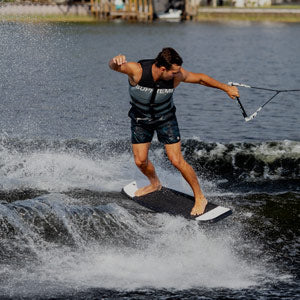
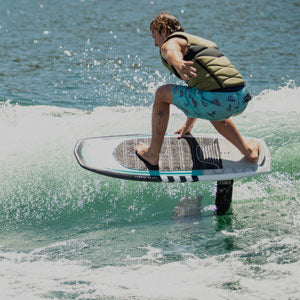
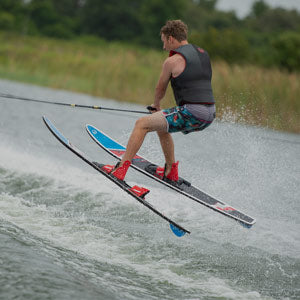
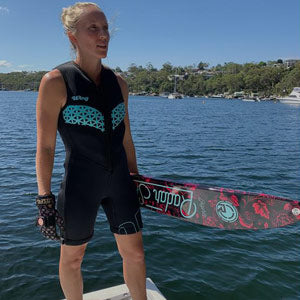
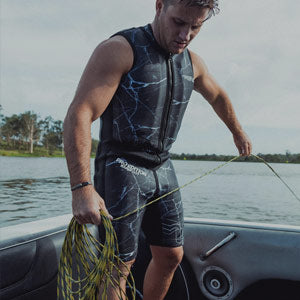
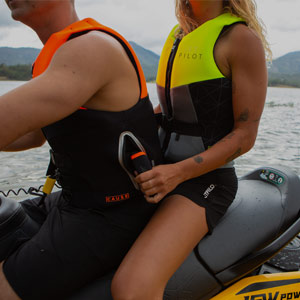
Buoyancy suits from Wing, Williams and Intensity — Australian Standards L50 and L50S approved. Combine flotation, warmth and impact protection in a single suit. Mens, womens, boys, girls and youth sizing.
A buoyancy suit is a wetsuit and a life vest in one — Australian Standards approved for flotation, with built-in neoprene padding for warmth and impact protection. They’re popular with slalom skiers, wakeboarders and water skiers who want a single piece of kit that covers everything: legal flotation, fall protection, and warmth in cold-water sessions. Certifications. The buoyancy suits stocked here carry L50S approval (smooth water — the standard for towed watersports), with selected models in L50 (smooth, partially smooth and open water). L50 and L50S share the same buoyancy rating — 50 newtons. The difference is the water type each is approved for, not the level of flotation. For dam and river skiing, L50S covers it. For more open water or PWC use, L50 is the right certification. Fit. A buoyancy suit needs to fit snug when dry. Neoprene stretches 2-3 inches when wet, so a too-loose suit will ride up during a fall and provide less flotation where it matters. If the suit is digging into your shoulders or crutch when dry, it’s a size too small. If there’s loose fabric anywhere, it’s a size too big. Always check the brand’s size chart against your chest and weight measurements, or bring it into the Brisbane store and try it on. Mens, womens and kids cuts. Womens-cut suits are shaped through the chest and waist; mens are cut straighter. Kids and youth suits run from boys and girls fits through to junior — sized to weight rather than chest measurement, with brighter colour palettes. Brands. Wing, Williams and Intensity. Wing is the long-running Australian specialist with ranges across mens, womens and kids. Williams covers mens, womens and youth. Intensity rounds out the mens and womens offering at competitive price points. Care. Rinse with fresh water after every session — salt and chlorine break neoprene down faster than anything else. Hang to dry away from direct sun. Don’t store wet in a closed bag. Avoid pulling on the suit with fingernails — small punctures spread fast in neoprene. Replace zip lubricant once a season if the zip is sticking.
Sign up for exclusive deals, latest product drops and more, plus get a first-order discount.
