








Gifting has never been easier
Perfect if you're short on time or are unable to deliver your gift yourself. Enter your message and select when to send it.

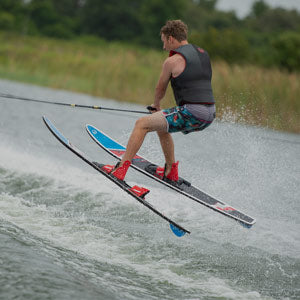
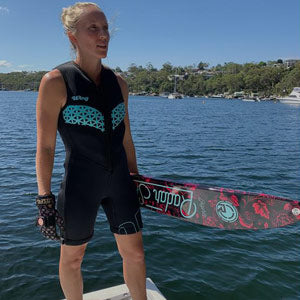
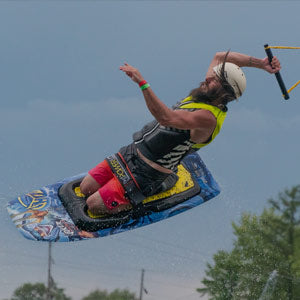
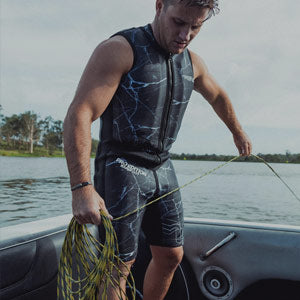
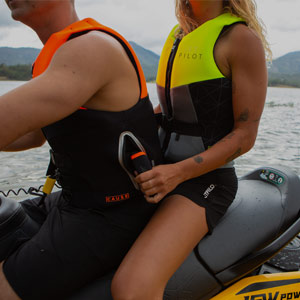
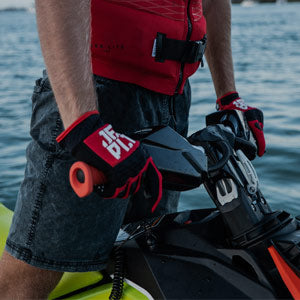
Wakeboard life vests built for a snug, flexible fit — L50S smooth-water vests in mens and womens cuts, plus impact vests for riders chasing big air. From Jetpilot, Follow, Ronix and Rip Curl.
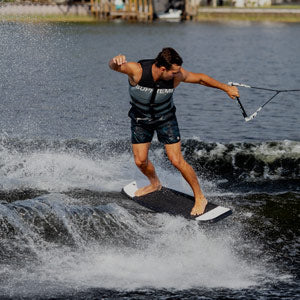
A life vest is a legal requirement for towed watersports in Australia, with fines for going without — but the right vest is also the difference between a session you forget about and one where the vest rides up every time you fall. For wakeboarding you want it snug, flexible through the shoulders and rated for the water you ride. Fit is everything. A vest should feel very snug when dry — it loosens a little once wet. A loose vest rides up over your face in the water and can come off in a hard fall, so do up both the zip and the waist belt or buckles every time. Wakeboard vests are cut closer and more flexible than boating vests so your arms move freely on the handle. L50S and L50 — the real difference. Both carry the same buoyancy, 50 newtons. What differs is the water they’re approved for and their colour, not how much they float. L50S is approved for smooth water — lakes, dams and rivers — and can be any colour, which is why most wakeboard vests are L50S. L50 is approved for smooth, partially smooth and open water on a PWC and has to be a safety colour, so it’s more common for jet ski. Neither floats you better than the other; choose by where you ride and check your local water classification. Mens and womens. Womens vests are shaped for a different torso and chest fit; mens run straighter. Both are sized by chest measurement for that snug fit, so size to the chart rather than to your shirt size. Impact vests are not life vests. An impact vest, or impact jacket, is built to cushion hard landings and give maximum flexibility for big air — but it is not an approved PFD and does not meet the legal life vest requirement. Wear an approved L50S or L50 vest to comply on the water, and treat an impact vest as extra protection, not a substitute. Brands. Jetpilot, Follow, Ronix, Rip Curl and Radar cover the range, in segmented neoprene designs across mens and womens, plus impact vests for riders going big. Care. Hand wash with mild detergent to clear salt, sunscreen and grime, never machine wash, store out of direct sun, and don’t use the vest as a cushion or fender.
Sign up for exclusive deals, latest product drops and more, plus get a first-order discount.
