











Gifting has never been easier
Perfect if you're short on time or are unable to deliver your gift yourself. Enter your message and select when to send it.

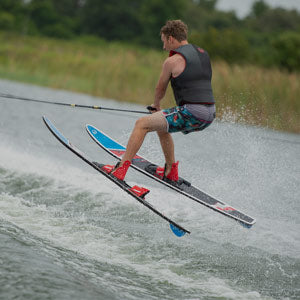
HO slalom ski boots and rear toe plates — sold separately for skiers fitting their own bindings. Open-toe, closed-toe and hardshell options. Stance, Atop, Syndicate and rear toe plate systems.
Why HO boots separately. Tournament and advanced recreational skiers fit boots to their feet, their stance and their riding style. Sold separately, HO boots let you build a custom setup, replace a worn boot without replacing your ski, or upgrade to a higher-spec boot mid-season. HO front boot construction tiers. Stance and Stance Plated — open-toe with traditional lacing. The recreational and intermediate workhorse. Forgiving flex, easy entry, good for progressing skiers and skiers running an RTP rear. Stance Atop and Stance Atop Plated — Stance platform with the Atop dial-tension lacing system for fast, precise adjustment. Same flex tier, faster on and off. Stance 130 and Stance 130 Atop — HO’s mid-tier Stance build with refined liner construction. Advanced intermediate through tournament. Animal — open-toe lace, simpler construction. Entry-level intermediate boot for skiers wanting a no-fuss front. Syndicate Hardshell — closed-toe hardshell construction for advanced tournament 3-Event skiers. Maximum lateral support, fixed liner, direct connection between rider and ski. Less forgiving but maximum response. HO rear toe plates (RTP). Stance Adjustable RTP — adjustable rear toe plate; slides forward or back to dial your stance. Stance Aluminium Adjustable RTP — same with aluminium plate construction for sharper response. Stance Womens Adjustable Plated RTP — womens-specific adjustable RTP. Atop Adjustable RTP — RTP with Atop dial tensioning. Fixed RTP — non-adjustable rear toe plate. Tournament setup. Older stock. Older HO boot models (SkyMAX, Xmax from previous seasons) are on clearance — solid boots, good prices, but check the year before buying. The Stance platform is the current production. Boot vs RTP — pick correctly. Front boots take a full foot. Rear toe plates take just the back toes (most skiers’ choice). Some advanced tournament skiers run a rear hard boot for precise back-foot control; most should run an RTP for easier release in falls. Bindings vs skis. HO boots mount on HO slalom ski blanks and most other slalom skis. If you have a non-HO ski, call us to confirm the hole pattern matches before ordering. Sizing. Manufacturer size chart on each product page. Closed-toe: between sizes, go down. Open-toe: between sizes, the range gives forgiveness, but the heel still needs to lock in.
Sign up for exclusive deals, latest product drops and more, plus get a first-order discount.
