










Gifting has never been easier
Perfect if you're short on time or are unable to deliver your gift yourself. Enter your message and select when to send it.

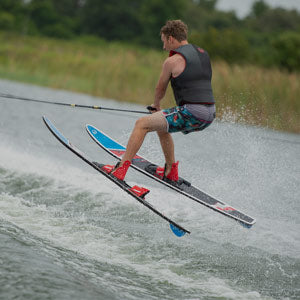
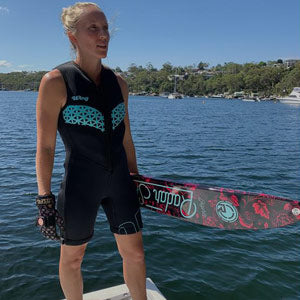
Radar slalom skis — the full Radar ski range, sold as complete packages with matched boots and rear toe plates. Beginner to advanced tournament, mens, womens and kids.
Why Radar. Radar Skis was built by slalom skiers, for slalom skiers — the brand has been a constant at the front of the sport for decades, with athletes carrying the equipment into tournament wins year after year. The current range spans first-timer cruisers through to the pointiest end of tournament 3-Event gear. Sold as complete ski packages. Radar skis in this collection are sold as the ski PLUS the matched boot system PLUS a rear toe plate (RTP) for the back foot. You don’t have to source boots separately — the package is the ride. Boot tier varies with ski tier: entry-level boots on the beginner skis, higher-spec boots with carbon and dual lacing on the advanced tournament packages. Skill levels in the range. The Radar lineup splits into beginner, intermediate and advanced tournament tiers. Beginner and wider shapes — wider tip and tail for easy starts, more stability, more lift. For first-timers, returning skiers and lower boat speeds. Forgiving and confidence-building. Intermediate and hybrid shapes — narrower tail than the beginner ski, but still wider than tournament. Great progression ski for skiers who want sharper turns without losing forgiveness. Suits 30-34 mph boat speeds. Advanced and tournament 3-Event shapes — narrow tail, sharper rails, more responsive rocker. Designed for 32-36 mph boat speeds and serious course work. Less forgiving but with the response and acceleration tournament skiers need. Mens, womens and kids. Womens-specific skis account for typical womens body weight and skiing speed — they’re not shorter mens skis. Kids skis are scaled to junior body weight and progression speeds. Boot pairings. Each ski tier is paired with a boot tier matched to the rider’s skill: open-toe Boa-laced boots for intermediate progression, dual-lace carbon boots for advanced tournament work. The rear is usually a rear toe plate (RTP) for easy release on falls — preferred by most recreational and intermediate slalom skiers over a hard rear binding. Sizing. By rider weight AND boat speed — use the manufacturer chart on each product page. As a general rule, beginners and returning skiers should go one size longer than the chart suggests. More ski equals more lift equals easier start equals more forgiving equals less tiring. You can size down later as you progress. Fin and foil. Skis arrive with factory fin and foil settings — these are the result of professional R&D and should be left alone until you’re competent enough to know what you’re changing and why. Factory settings are typically a 7° foil down angle. Don’t go below 6° — risk of tail blowout. Pre Order. Some current-season skis are flagged Pre Order — manufacturer stock is staged through the season. Pre Order locks your size at current price; we ship as the shipment lands. Try Before You Buy. Selected Radar skis are in our demo fleet. Hire fees vary by product.
Sign up for exclusive deals, latest product drops and more, plus get a first-order discount.
