















Gifting has never been easier
Perfect if you're short on time or are unable to deliver your gift yourself. Enter your message and select when to send it.
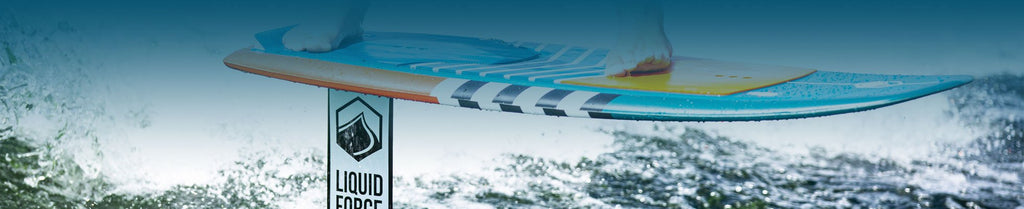
The Breakdown: how wake foiling works and how to pick your first setup.
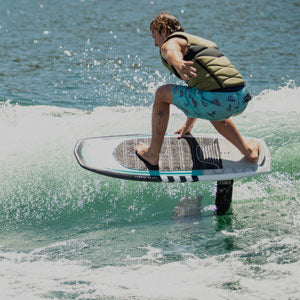
Wake foiling means riding the boat's wake pulse on a board mounted to a hydrofoil — a mast with front and rear wings that lifts the board clear of the water so you glide above the surface. The start mirrors a wakesurf start: you're pulled up behind the boat, then settle onto the wake's push and, once foiling, can ride rope-free. Like wake surfing, it should only be done behind an inboard boat. A foil setup is a board plus the foil itself — mast, fuselage, front wing and rear wing. You can buy a complete kit matched and ready to ride, or build and upgrade piece by piece. Modular systems such as Armstrong's A+ let masts, fuselages and wings interchange, so you can change the feel or progress without replacing everything. The front wing and mast set how the foil rides. A larger, lower-aspect front wing lifts earlier at slow speed and is the most stable underfoot — the right choice for learning. Higher-aspect wings are faster and more efficient but suit riders who already have the basics. A shorter mast keeps you closer to the water and is more forgiving while you learn; a longer mast gives more clearance to carve and pump once you're confident. Size the wing up if you're heavier. Foils are mostly carbon — light and rigid, but the edges are sharp and chip easily. Cover the wings and mast in transport and storage, keep them off hard surfaces, and lubricate every bolt against corrosion and binding even though carbon itself doesn't corrode. Check all fasteners before each session, take care around other people in the water, and never jump in near a foil. Waterskiers World stocks Armstrong, Liquid Force, Hyperlite and Ronix, as complete kits, boards and individual components. Browse the full range online or visit the Brisbane store for a hand getting your first setup right.
Sign up for exclusive deals, latest product drops and more, plus get a first-order discount.
