








Gifting has never been easier
Perfect if you're short on time or are unable to deliver your gift yourself. Enter your message and select when to send it.

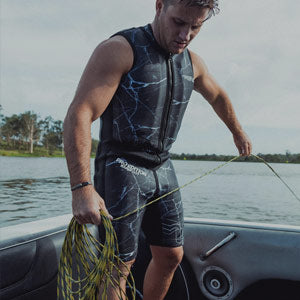
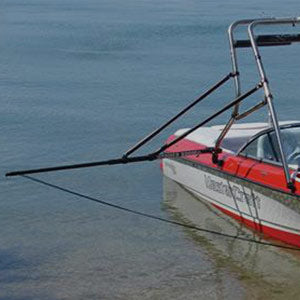
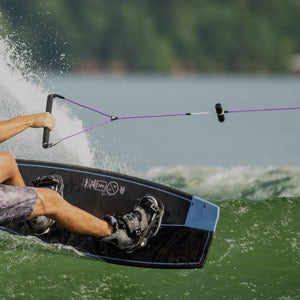
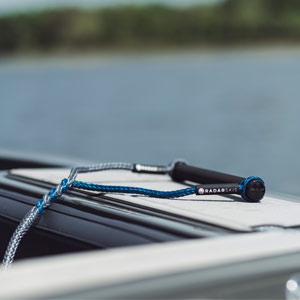
Barefooting puts your body under more load than any other towed sport — you're skiing on the soles of your feet at 60-plus km/h, and falls happen fast. The equipment exists to manage exactly that. A barefoot suit is the foundation. It's an extra-robust wetsuit built to take heavy, high-speed falls and stay on through them, with far more padding and reinforcement than a standard wetsuit. Some barefoot suits are L50S-approved for buoyancy as well — check the individual product. Barefoot shorts add protection where it's needed most: some are full-wrap undershorts worn beneath a suit, others are standalone shorts worn on their own. Either way they're a protection-first item, guarding against high-pressure water entry on a fall. Booms are the learning tool. A boom bar mounts to the boat and holds a rigid handle out to the side, so a beginner can find their feet right beside the boat with the driver coaching in real time. We stock Barefoot International booms in straight, contour, gunnel and V-drive configurations, plus extensions, height adjusters, clamps and pads to set one up on your boat. Barefoot ropes are longer than standard ropes — they need to reach the flat water well behind the boat — and very low-stretch for a positive, direct connection. Barefoot mainlines use Spectra for that minimal stretch. Toe handles come in two forms: a shorter front-toe handle for front toe holds, and a longer back-toe handle for back toe holds, both with floats and rigid tubing so they hold position in the water. As a guide, barefoot runs start with a deep-water start at low speed, with run speeds set by rider weight — roughly 46 km/h at 40kg up to 67 km/h at 100kg, a few km/h slower off the boom. Browse the full barefoot range online or visit the Brisbane store, where the team has barefooted for decades and can set you up from your first boom session onwards.
Sign up for exclusive deals, latest product drops and more, plus get a first-order discount.
